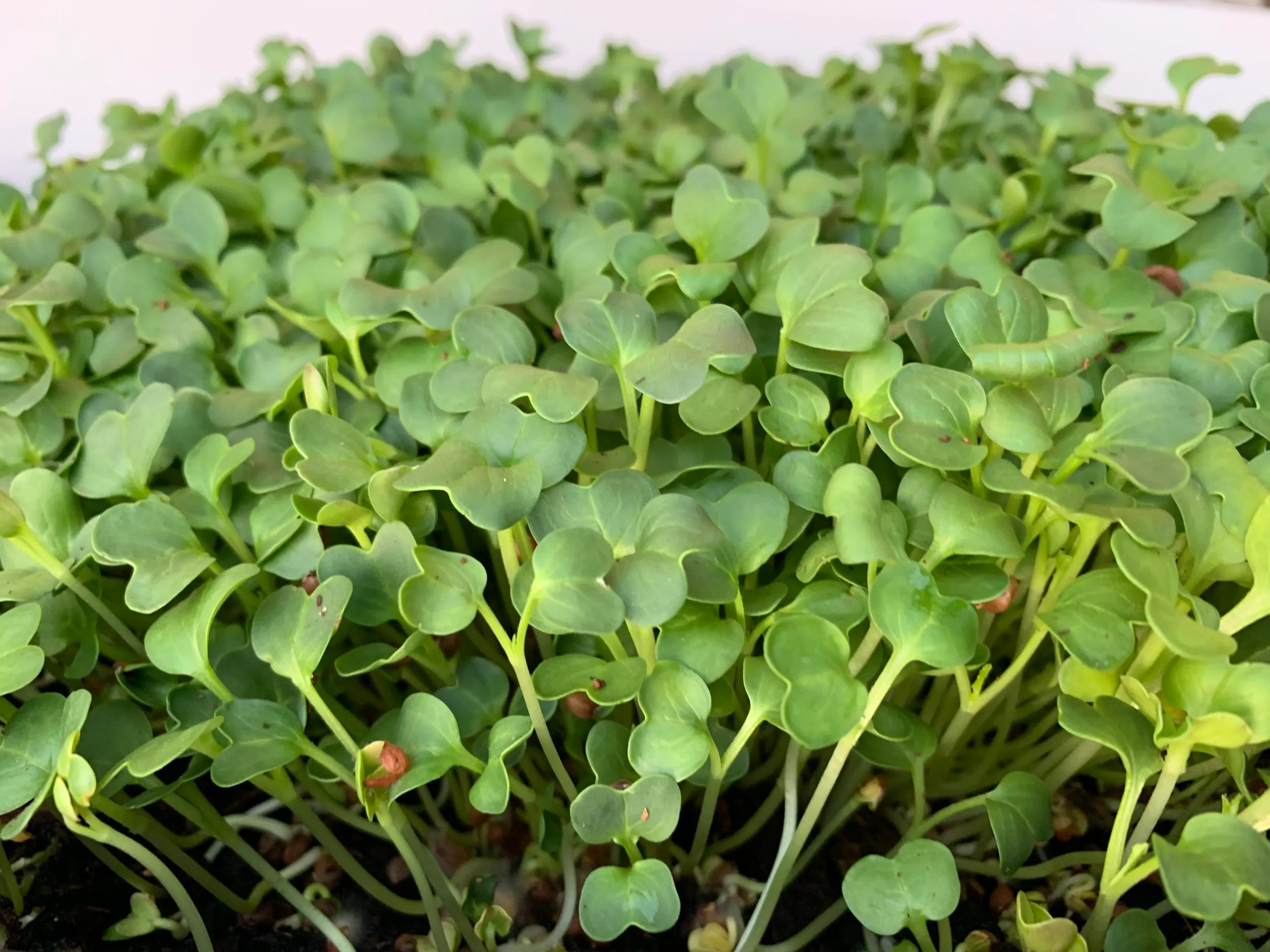
BayArea Micro: Delivering Fresh, Organic Microgreens in San Jose
San Jose, the vibrant heart of Silicon Valley, is leading a new wave of urban agriculture. Known for its perfect Mediterranean climate, San Jose offers a unique opportunity for sustainable food production. At BayArea Micro, we are reclaiming the city's agricultural roots by specializing in high-quality microgreens in San Jose, grown right where they are consumed.
The Rise of Urban Farming in Silicon Valley
The Santa Clara Valley was historically celebrated as "The Valley of Heart's Delight." Today, we are bringing that delight back through modern urban farming. By utilizing local resources, we provide residents with nutrient-dense produce that hasn't spent days on a truck. Choosing microgreens in San Jose means choosing flavor and freshness that only local harvesting can provide.
100%
Local San Jose Grown
0
Synthetic Pesticides
Why Choose Our San Jose Microgreens?
Our commitment to the local community goes beyond just growing plants. We focus on a same-day harvest to delivery model, ensuring that the vitality of the plant is preserved for your table.
Sustainable Practices for a Better Future
Every tray of microgreens in San Jose produced by BayArea Micro follows strict organic standards. We use non-GMO seeds and zero synthetic fertilizers, making our greens safe for your family and the local environment.
🌟 Supporting Local San Jose Agriculture
When you subscribe to BayArea Micro, you are directly investing in the sustainability of your city. Our hyper-local model minimizes transportation emissions and ensures that the health benefits of microgreens are delivered at their absolute peak.
Local Varieties Available Now
Sunflower Shoots: A nutty, crunchy staple for San Jose salads.
Broccoli Microgreens: Famous for high sulforaphane content.
Radish Greens: Adds a spicy, local kick to any dish.
February 7, 2026 • 12 min read
The Scientific Health Benefits of Microgreens: Nature's Superfood
Executive Summary: What are the Health Benefits of Microgreens?
Microgreens are young vegetable greens harvested just after the first true leaves appear. They contain up to 40 times higher concentrations of vital nutrients—such as Vitamin C, E, and K—compared to their mature counterparts. These potent plants support heart health, reduce chronic disease risk, and provide concentrated nutrition essential for a healthy lifestyle in the Bay Area.
Microgreens are much more than just a garnish; they are nutritional powerhouses. Harvested just 7-21 days after germination, these young seedlings contain up to 40 times the nutrient density of their mature counterparts. Understanding the health benefits of microgreens is key to optimizing your daily diet.
40×
Higher Vitamin Concentration
High
Antioxidant Levels
The Nutritional Powerhouse: Why Microgreens Matter
Microgreens are not just garnishes; they are functional superfoods. Scientists at major agricultural research centers have found that these "miniature" plants pack a significant nutritional punch.
Concentrated Nutrient Density
Based on recent data from the USDA, microgreens consistently outperform mature vegetables in vitamin and antioxidant concentrations. While a mature head of broccoli is healthy, a handful of broccoli microgreens provides a more concentrated dose of sulforaphane. This compound is widely studied for its potential anti-cancer properties.
Rich in Polyphenols
Polyphenols are a class of antioxidants linked to a lower risk of heart disease and Alzheimer’s. Research published in the Journal of Agricultural and Food Chemistry suggests that microgreens contain a wider variety of polyphenols than their fully grown versions. For health-conscious residents in the Bay Area, incorporating these into a daily diet is an efficient way to boost cellular protection.
Key Health Benefits of Microgreens
1. Potent Cancer-Fighting Compounds
Among all varieties, broccoli microgreens are perhaps the most studied for their medicinal properties. They are exceptionally high in glucoraphanin, which converts into sulforaphane. This compound has been shown in clinical studies to inhibit cancer cell growth and support detoxification pathways.
2. Anti-Inflammatory and Heart Health
The health benefits of microgreens extend to cardiovascular support. Rich in polyphenols—a class of antioxidants linked to reduced heart disease risk—microgreens can help lower LDL cholesterol and reduce systemic inflammation. Microgreens are rich in fiber and vitamin K, which help maintain healthy blood pressure. Red cabbage microgreens, specifically, have been shown in clinical studies to lower "bad" LDL cholesterol levels. Reducing these markers significantly lowers the risk of cardiovascular events.
🛡️ Nutritional Breakdown per Variety
Red Cabbage: Packed with Vitamin C and U. Sunflower: Contains all essential amino acids. Cilantro: High in Lutein for eye health.
3. Improved Digestion and Immunity
Because they are harvested so early, microgreens are rich in active enzymes that aid digestion. Additionally, their high concentration of Vitamin A and C supports a robust immune response, helping your body fight off seasonal illnesses. Reducing these markers significantly lowers the risk of cardiovascular events.
4. Support for Diabetes Management
Certain varieties, such as fenugreek or kale microgreens, may help regulate blood sugar levels. Studies suggest that the high antioxidant content helps improve insulin sensitivity, making them a smart addition to a nutrition plan focused on metabolic health.
Comparison: Microgreens vs. Mature Vegetables
Per gram of fresh weight, microgreens consistently outperform their fully grown counterparts across every major nutrient category.
Nutrient
🌱 Microgreens
🥦 Mature Vegetables
Health Impact
Vitamin C
Very High · ~20mg
Moderate · ~3mg
🛡️ Immune Support
Beta-Carotene
Extremely High
Moderate
👁️ Vision & Skin
Vitamin E
High
Low
✨ Anti-Aging
Vitamin K
Very High
Moderate
❤️ Heart & Bone Health
Phytochemicals
4× – 40× Higher
Standard
🧬 Disease Prevention
Sulforaphane
Exceptionally High
Low
🛡️ Anti-Cancer
Antioxidants
Up to 40× More
Standard
⚡ Cellular Protection
Why Local Sourcing in the Bay Area Matters
Nutrient Retention: Vitamins degrade quickly after harvest. Local Bay Area greens reach your plate within 24 hours for peak potency.
Reduced Carbon Footprint: Supporting local growers reduces the environmental impact of long-distance shipping.
Bioavailability: Freshly harvested greens maintain intact enzymes, which aids in nutrient absorption.
Frequently Asked Questions
Are microgreens better for you than regular vegetables?
Yes, in terms of nutrient density. While mature vegetables provide bulk and fiber, microgreens offer a much higher concentration of vitamins and antioxidants per gram.
Can you eat microgreens every day?
Absolutely. Most nutritionists recommend daily consumption to maintain high antioxidant levels. A small 1-2 ounce serving per day is sufficient.
Do microgreens lose nutrients when cooked?
Microgreens are best eaten raw. Heat can destroy sensitive enzymes and water-soluble vitamins like Vitamin C. Add them to dishes after cooking is complete.
February 6, 2026 • 10 min read
Microgreens in the Bay Area: A Revolution in Sustainable Eating
The San Francisco Bay Area has always been at the forefront of food movements. Today, the focus has shifted toward hyper-local sustainability. BayArea Micro is proud to be a leading provider of microgreens in the Bay Area, bridging the gap between urban living and fresh agriculture.
Why the Bay Area is the Hub for Microgreens
Our region's unique microclimates allow for a diversity of growth that few other places can match. From the fog-cooled hills to the sun-drenched valleys, microgreens in the Bay Area thrive year-round, providing a consistent source of nutrition for health-conscious residents.
95%
Less Water Usage
Local
Bay Area Sourced
Environmental Impact of Local Farming
The traditional produce supply chain is carbon-intensive. By growing microgreens in the Bay Area, BayArea Micro reduces food miles by over 90%. This means less fuel, less packaging, and a significantly lower carbon footprint for every meal you eat.
Serving the South Bay and Beyond
Our delivery network ensures that whether you are in Sunnyvale, Mountain View, or Palo Alto, you have access to the highest quality microgreens in the Bay Area. We believe that everyone in Silicon Valley should have access to "The Valley of Heart's Delight" right in their kitchen.
🌍 The Sustainable Choice
Choosing microgreens in the Bay Area isn't just a health choice—it's an environmental one. Our indoor and controlled-environment farms use a fraction of the water required for traditional row crops, making it the most water-wise way to eat green.
February 5, 2026 • 7 min read
How to Add Microgreens to Every Meal
Microgreens are one of the most versatile ingredients you can keep in your kitchen. Their bright flavors, tender texture, and extraordinary nutrition make them a natural fit for any meal — from a quick weekday breakfast to an elaborate weekend dinner.
Breakfast: Start Your Day Right
The morning meal is the easiest place to begin. A small handful of mild sunflower or pea shoots added to scrambled eggs or an omelette brings a fresh, slightly nutty flavor without overpowering the dish. Blending an ounce of broccoli or kale microgreens into a morning smoothie is nearly tasteless but delivers a powerful nutrient boost before you even leave the house.
🥤 Quick Smoothie Tip
Blend 1 oz of broccoli microgreens with banana, frozen mango, and coconut water. You won't taste the greens, but you'll get a concentrated hit of sulforaphane and Vitamin C to kick off your day.
Lunch: Elevate the Everyday
Sandwiches, wraps, and grain bowls all benefit from a layer of microgreens in place of standard lettuce. Radish microgreens add a peppery bite to avocado toast or a turkey sandwich. Sunflower shoots provide crunch and creaminess to grain bowls alongside roasted vegetables and tahini dressing.
1–2 oz
Recommended daily serving
~15
Calories per serving
Dinner: The Finishing Touch
The golden rule for dinner: add microgreens after cooking. Heat destroys the enzymes and water-soluble vitamins that make them so valuable. Use them as a finishing garnish on soups, pasta, grilled fish, or steak. A small nest of arugula microgreens on a piece of pan-seared salmon provides both visual appeal and a bright, peppery counterpoint to the rich fish.
Because BayArea Micro delivers same-day harvested greens, you'll want to keep them performing at their best. Store them unwashed in their container in the coldest part of your refrigerator. Most varieties stay vibrant for 5–7 days. Only rinse immediately before eating — water accelerates breakdown if they sit wet in the fridge.
🌿 The 5-Minute Habit
Keep a container of microgreens on the top shelf of your fridge — eye level, easy to grab. The easier they are to reach, the more consistently you'll use them. That small habit change is often all it takes to build daily microgreen consumption.
February 3, 2026 • 9 min read
The Science of Same-Day Harvest Nutrition
Most people assume that a vegetable is a vegetable — that a bunch of broccoli from a grocery store shelf is nutritionally equivalent to one just pulled from the ground. The science tells a very different story. What happens in the hours and days after harvest is one of the most underappreciated factors in nutrition, and it is central to why BayArea Micro operates on a same-day harvest model.
What Happens to Nutrients After Harvest?
The moment a plant is cut, it begins a process called post-harvest senescence — essentially, it starts dying. Cellular membranes break down, enzymes that were previously compartmentalized begin interacting with nutrients, and oxidation accelerates. The result is a measurable and rapid degradation of vitamins, antioxidants, and phytonutrients.
15–50%
Vitamin C lost within 24 hours at room temp
3–7 days
Typical transit time for grocery store produce
Vitamin C: The Fastest Casualty
Ascorbic acid (Vitamin C) is among the most sensitive nutrients to post-harvest degradation. Studies have shown that spinach stored at refrigerator temperatures can lose up to 90% of its Vitamin C within 7 days. Even at optimal cold-chain conditions, significant losses occur within the first 24–48 hours after cutting.
Sulforaphane and Glucosinolates
In broccoli microgreens, the precursor to sulforaphane — glucoraphanin — is converted by the enzyme myrosinase when plant cells are damaged (such as during chewing or cutting). However, when produce ages, both glucoraphanin levels and myrosinase activity decline. Eating freshly harvested broccoli microgreens maximizes the sulforaphane yield your body actually receives.
🧪 The Freshness Window
Research from the University of California, Davis postsucrose behavior in leafy greens suggests the optimal consumption window for maximum phytonutrient density is within 4–6 hours of harvest for certain volatile compounds. BayArea Micro targets delivery within that window on every order.
The Cold Chain Problem
The conventional produce supply chain involves harvesting, packing, pre-cooling, loading onto refrigerated trucks, distribution center sorting, re-loading, retail delivery, shelf stocking, and finally consumer purchase. Even under ideal refrigeration, this process takes a minimum of 3–5 days for local California produce and up to 2 weeks for items shipped from Mexico or Arizona.
How Same-Day Harvest Changes the Equation
By harvesting to order each morning and delivering the same day, BayArea Micro eliminates every link in that degradation chain except one — your kitchen. You receive greens at peak enzyme activity, peak antioxidant concentration, and peak flavor. The difference is not subtle: same-day microgreens have a brightness, crunch, and vitality that refrigerator-aged greens simply cannot match.
Enzyme Activity and Bioavailability
Beyond vitamins, living enzymes in fresh plant material play a role in digestion. Amylases, proteases, and lipases present in raw, fresh greens can assist in breaking down macronutrients when consumed. As produce ages, these enzymes either degrade or are deactivated. Eating fresh microgreens is, in a real sense, eating food that is still biochemically alive.
Hours
From harvest to your door with BayArea Micro
Days–Weeks
Typical grocery store produce age at purchase
The Bottom Line
Nutritional science is clear: freshness is not a marketing claim — it is a measurable, physiologically meaningful variable. When you choose same-day harvested microgreens from BayArea Micro, you are not paying for convenience. You are paying for the nutrition that slower supply chains systematically destroy before the food ever reaches your plate.
January 28, 2026 • 8 min read
Natural Sunlight vs. Grow Lights: What's Better for Microgreens?
Walk through any urban farming expo or visit most commercial microgreen operations and you will find rows of LED grow lights humming overhead. Artificial lighting has become the default for indoor cultivation — and for good reason. But at BayArea Micro, we take a different approach, leveraging San Jose's exceptional natural light conditions. Here's why that choice matters, and what the science says about light quality and plant nutrition.
The Spectrum Question
Sunlight delivers the full electromagnetic spectrum — ultraviolet, visible, and infrared — in proportions that plants evolved alongside over hundreds of millions of years. Modern horticultural LEDs are impressive, but they produce a carefully curated subset of that spectrum, typically emphasizing red (660nm) and blue (450nm) wavelengths that drive chlorophyll absorption and photosynthesis.
What the Research Shows
A growing body of research suggests that UV-B radiation — present in natural sunlight but absent from most grow lights — plays a meaningful role in stimulating the production of protective phytochemicals in plants. Plants under UV stress produce more polyphenols, flavonoids, and anthocyanins as a defense response. These same compounds are the antioxidants humans benefit from when they eat those plants.
UV-B
Triggers protective antioxidant production in plants
300+
Annual sunny days in San Jose
🌞 San Jose's Light Advantage
San Jose averages over 300 sunny days per year — more than Miami or Honolulu. This exceptional natural light availability makes it one of the best locations in the continental United States for sun-grown microgreens, and it is a core reason BayArea Micro is based here.
The Case for Grow Lights
Fairness requires acknowledging where artificial lighting genuinely excels. LED grow lights offer total control over photoperiod — you can run 16–18 hour light cycles regardless of season or weather. They enable fully indoor, climate-controlled operations that are immune to cold snaps, fog events, or air quality issues. For operations scaling to high commercial volumes in unpredictable climates, grow lights are often the right choice.
Energy and Environmental Cost
The environmental calculus is worth noting. A typical commercial indoor microgreen operation running LED lighting for 16 hours per day consumes significant electricity — often sourced from the grid with its associated carbon footprint. Sun-grown microgreens, by contrast, use zero energy for lighting. In a state like California with ambitious climate goals, this difference is not trivial.
Taste and Color Differences
Growers and chefs who have compared sun-grown and LED-grown microgreens frequently report that sun-grown varieties exhibit more intense color — deeper reds in red cabbage, more vivid greens in sunflower shoots — and a more complex, robust flavor profile. The UV-induced stress response that produces more antioxidants may also be responsible for these sensory differences. Stress, in plant biology, often equals flavor.
Our Approach: Sunlight First
At BayArea Micro, our growing environment prioritizes natural sunlight, supplemented only when cloud cover or seasonal shifts require it. We believe that working with nature rather than replacing it produces a superior product. The same philosophy that led us to same-day delivery — minimizing the distance between the plant's living state and your plate — guides our decision to grow in sunlight whenever possible.
🌿 The Whole-System View
Neither approach is universally superior — context matters. But for a Bay Area operation with San Jose's unmatched sun exposure, abundant natural light, and a customer base that cares deeply about environmental impact, natural sunlight isn't just a romantic choice. It is the scientifically and ecologically sound one.